
Galvanized Steel Grating Specification Guide
A useful galvanized grating specification defines the base steel and grating construction first, then requires fabrication before hot-dip galvanizing, an applicable coating standard, inspection, repair, packing and site handling.
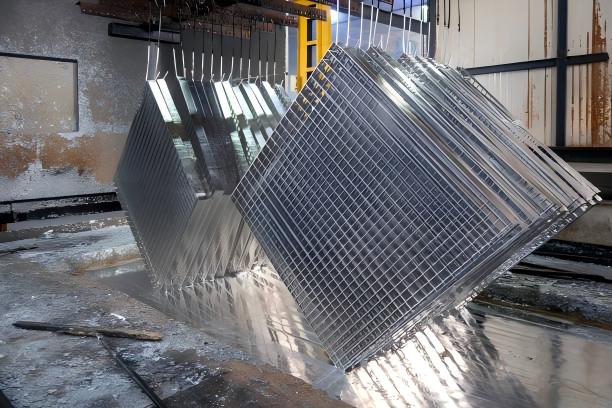
What is hot-dip galvanized steel grating?
It is fabricated carbon-steel grating immersed in molten zinc so zinc-iron alloy layers and an outer zinc layer form on accessible steel surfaces. The coating provides sacrificial corrosion protection as well as a barrier to the environment.
1) Specify the grating before the coating
Define welded or press-locked construction, bearing-bar size and spacing, cross-bar spacing, surface profile, load and span, panel dimensions, banding, cut-outs, toe plates and fixings. “Galvanized grating” alone does not define structural capacity or opening size.
2) Select the governing galvanizing standard
Projects commonly reference ASTM A123/A123M or ISO 1461 for batch hot-dip galvanized fabricated steel. State the edition required by the contract, inspection basis, acceptance documents and any project-specific criteria. Do not combine isolated requirements from different standards without resolving conflicts.
3) Fabricate before hot-dip galvanizing
Cutting, welding, banding, drilling and attachment of permanent items are normally completed before galvanizing. This allows the finished fabrication to receive zinc protection. If site modifications are unavoidable, the project must define an approved zinc-repair method and inspection.
4) Design for drainage and safe processing
Grating itself is open, but attached frames, hollow sections, pockets or close details can trap process fluids or air. The fabricator and galvanizer should review venting, drainage, lifting and suspension points before production. Large asymmetric panels may need special handling to control distortion.
5) Appearance versus performance
Fresh galvanized surfaces may vary in brightness, spangle, texture and shade. Visual differences do not by themselves establish coating failure. Acceptance should follow the specified standard and inspection criteria, including coating coverage and any agreed thickness measurements.
6) Coastal, industrial and wet exposure
Service life depends on zinc coating mass, time of wetness, salt or chemical deposition, drainage, crevices, maintenance and damage. For severe chloride or chemical exposure, compare hot-dip galvanizing with a duplex coating, stainless steel, aluminum or FRP using a project corrosion review.
7) Packing and installation controls
- Use separators and lifting methods that avoid coating abrasion.
- Keep bundles dry and ventilated to reduce wet-storage staining.
- Match piece marks to drawings and packing lists.
- Use approved clips instead of unnecessary site welding.
- Repair damaged areas using the specified method and record the inspection.
Example purchase specification
“Fabricate welded carbon-steel grating panels complete with banding and openings to approved drawings. Hot-dip galvanize after fabrication to the project-specified edition of ASTM A123/A123M or ISO 1461. Provide coating inspection records, identified packing and approved repair procedure.” The project engineer should add load, bar size, mesh, tolerances and document details.
Frequently asked questions
Should steel grating be galvanized before or after fabrication?
Completed panels are normally galvanized after cutting, banding and welding so fabricated surfaces receive zinc protection.
Can galvanized grating be used near the coast?
Often yes, but exposure severity and desired service life must be reviewed. Severe or continuously wet chloride exposure may justify additional protection or another material.
What should I include in an RFQ?
Include the grating specification, drawings, exposure, galvanizing standard, inspection documents, destination and packing needs. Send the project requirements for review.