ISO 9001:2015
Process control, internal audits, calibration discipline, and retrievable inspection records for export batches. Pair with your QC hold points and witness plan.
Your internal review usually asks: Do they make the full package? Which standards can they defend? What should we attach to the RFQ? What documents come back with the quote? This hub is structured to answer those questions in order—so you invite fewer vendors and waste less engineering time.
Price is only compared after credibility is established. Mature procurement teams first check technical fit, standards fluency, execution control, and documentation readiness.
The legal manufacturer holds ISO 9001:2015 for production of steel grating. A separate voluntary VoC is available for review, with its limitations stated openly; it is not a CE certificate. Lead with the destination market, governing specification and required declaration or test basis so the correct evidence can be confirmed before quotation.
Process control, internal audits, calibration discipline, and retrievable inspection records for export batches. Pair with your QC hold points and witness plan.
The current VoC is a voluntary verification record and does not replace a Declaration of Performance or CE marking where those are legally required. Review certificate numbers, validity and stated scope.
The pages below are the fastest way to validate whether Wiberg fits your project package and standards environment.
Industrial bar grating Open product center
Reference support for GB, ANSI/NAAMM, ASTM, EN/BS, and related galvanizing/finish standards used in project documentation.
View standards and referencesMesh designation, bar size, span direction, load case, deflection limit, finish, cut-outs, banding, and documentation requirements.
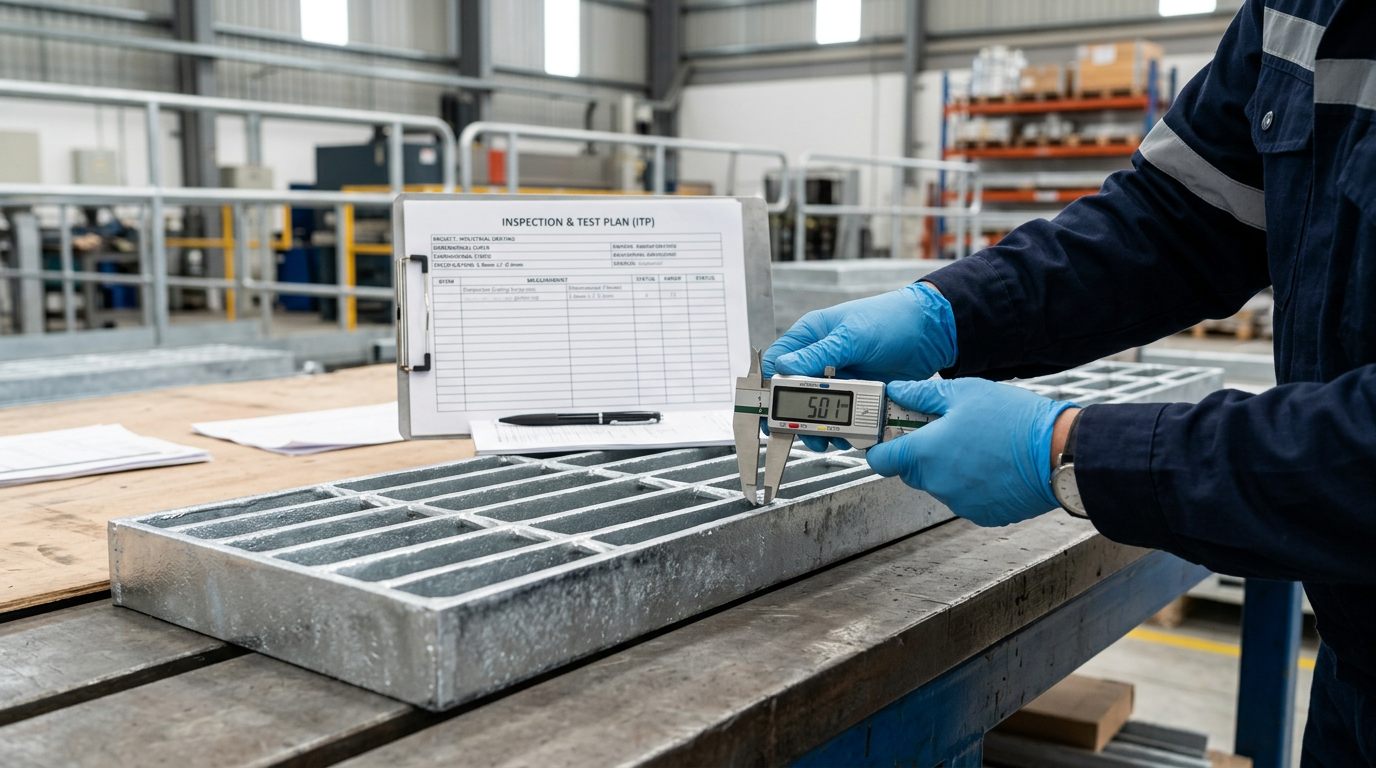
For EPC and industrial projects, documentation is as critical as the physical product. We provide comprehensive traceability and inspection support.
We understand that for major infrastructure and energy projects, the product is not complete without the paperwork. Our standard handover package includes:
This is the front-loaded process mature buyers expect. If these stages are clear, quotation becomes faster and cleaner.
Check manufacturing scope, standards familiarity, export readiness, and project references before asking for a commercial number.
Freeze dimensions, support spans, finish, load requirements, documentation scope, and destination details.
Resolve alternatives, deviations, field tolerances, packing logic, and inspection hold points before commercial release.
Compare price together with lead time, galvanizing window, export risk, and shipment split by installation priority.
A mature supplier process does not stop at sending a price. Buyers want to know how technical review, clarification, and delivery planning will be managed after the inquiry lands.
We first check whether the RFQ contains enough information to quote responsibly: spans, panel direction, load basis, finish, quantities, and destination. Missing items are clarified before commercial assumptions get locked in.
If drawings conflict with standards, installation conditions, or practical fabrication limits, we flag the issue early so your team can compare bids on the same technical basis instead of hidden assumptions.
The commercial offer should come with more than a number: product basis, finish basis, documentation scope, packing basis, lead-time logic, and any exclusions or alternatives that affect procurement decisions.
After award, the workflow moves into drawing approval, production release, inspection planning, packing confirmation, and shipment coordination so the order remains traceable through delivery.
Use this quick matrix to move from “vendor browsing—to real procurement alignment.
| Decision area | What buyers need to confirm | Where to verify |
|---|---|---|
| Product fit | Correct family, mesh style, fabrication capability, accessories. | Products |
| Standards basis | GB / NAAMM / EN references, galvanizing rules, documentation basis. | Standards |
| Typical specification | Bar size, pitch, support span, load case, deflection, finish. | How to Specify |
| Lead time and execution risk | Drawing approval gate, galvanizing queue, inspection windows, shipment float. | Lead Time Guide |
| Finish strategy | Galvanized vs painted vs stainless based on exposure and lifecycle cost. | Finish Guide |
| Document pack | Catalogs, datasheets, load tables, installation references. | Downloads |
A first-tier supplier website should not stop at product photos. It should reduce buyer uncertainty with technical and commercial decision support.
Send the technical basis first. You will get a faster response, fewer clarification loops, and a quotation that is easier to compare internally.
These are the questions that usually decide whether a steel grating supplier is ready for project procurement, not just casual browsing.
Send panel drawings or a schedule, support span and bearing direction, quantity list, governing standard, load and deflection requirement, material and finish, plus delivery destination or port. If inspection or documentation is required, include that in the first inquiry.
Yes. Project quotes can include cut-to-size fabricated panels with cut-outs, banding, edge treatment, nosing, and fixing locations based on approved drawings or schedules.
Serious buyers should review the full chain: drawing approval, raw material allocation, fabrication capacity, galvanizing queue, inspection hold points, packing, and export shipment window. The right comparison is total execution readiness, not only workshop days.
Hot-dip galvanized carbon steel is the most common baseline for industrial outdoor service. Painted, duplex, aluminum, FRP, or stainless options may be better depending on corrosion exposure, maintenance policy, hygiene requirements, or lifecycle cost targets.