
Steel Grating Load Capacity Explained
Load tables only answer the question you ask. This page explains what “capacity—means for welded steel bar grating: which span, which load case, which deflection cap, and which direction the bearing bars run.
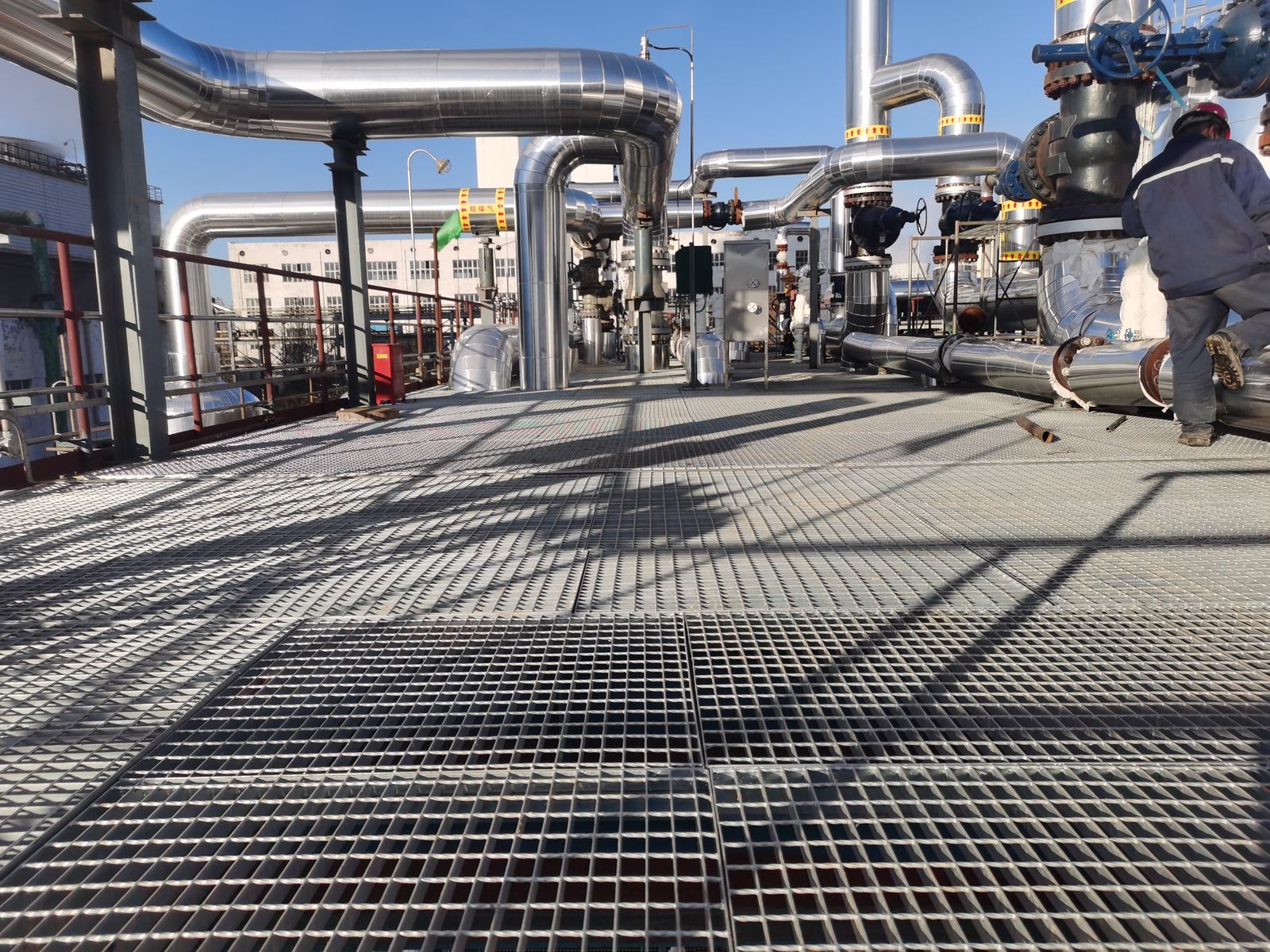
Introduction
Procurement teams often receive a single line on a schedule——9-W-4 galvanized”—without the structural context that made that line valid. In reality, welded bar grating capacity is a function of bar depth, bar thickness, bearing bar pitch, span between supports, support fixity assumptions baked into the table, and whether the published limit is driven by bending stress or by a deflection criterion. Mixing “factored—loads with “service—tables—or using the wrong span—is how platforms end up over-flexing while still carrying the wrong title on the drawing.
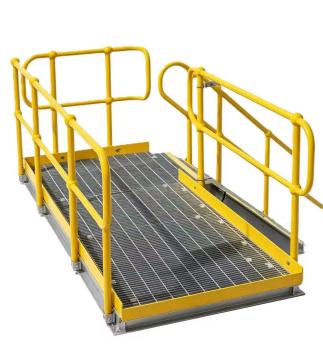
Uniform load versus concentrated load
Uniform distributed load (UDL)
UDL is expressed as pressure: kN/m², kPa, or psf. It represents people, insulation crews, snow in some geographies, or owner live-load bands on maintenance walkways. Catalog load tables for standard-duty mesh usually tabulate allowable uniform load versus span for a stated deflection limit (read the footnotes).
Concentrated or patch loads
Wheels from pallet jacks, cable drum rollers, or valve maintenance skids create high local bending over one or two bearing bars. For those cases, move from “walkway tables—to explicit checks. Heavy-duty welded grating exists precisely because some duty classes cannot be honestly served by the lightest mesh in the brochure.
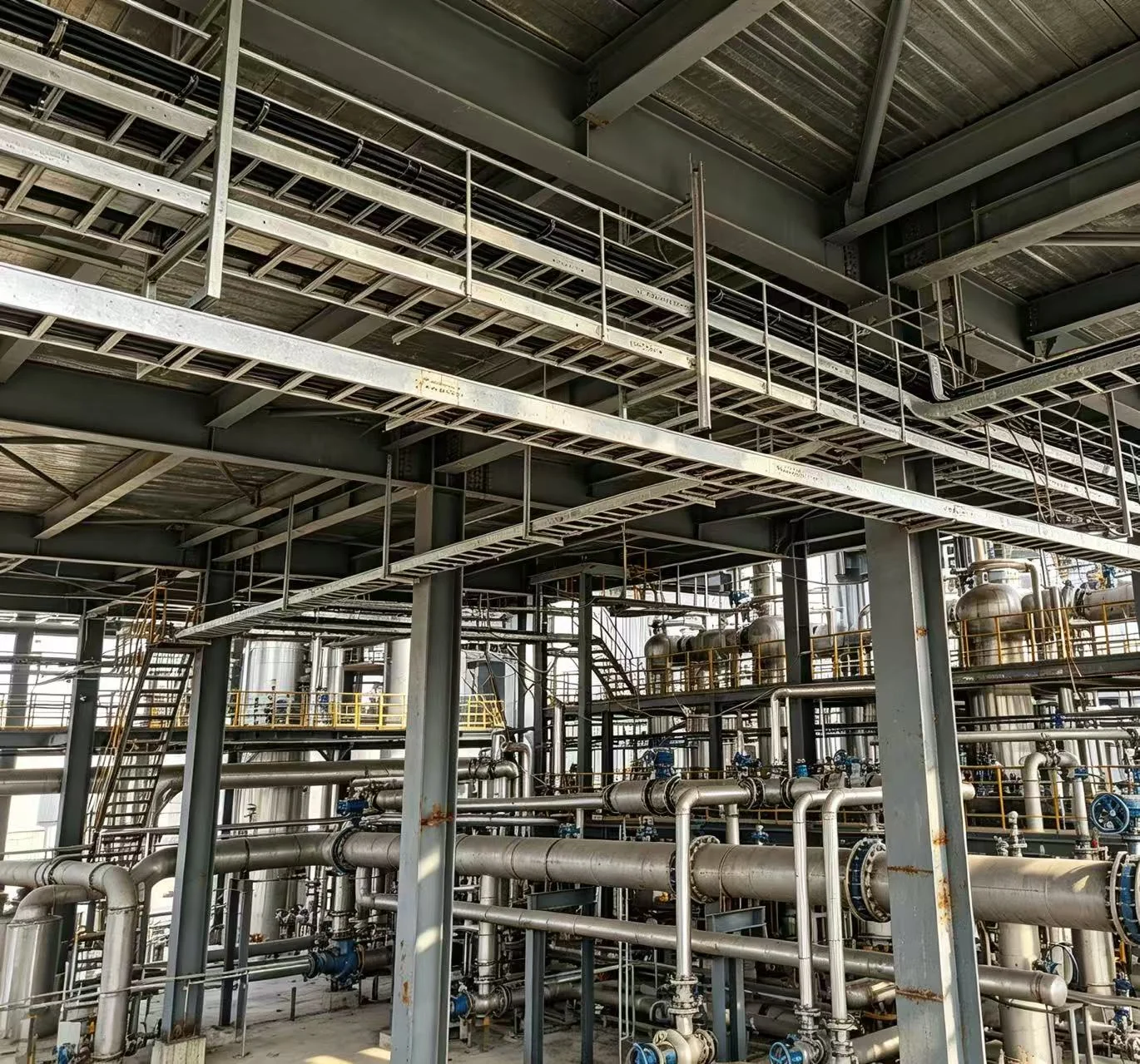
Deflection: the limit that bites on long spans
Steel may still be below yield while the panel feels “bouncy—or shows mid-span dip that trips inspectors. Many owner specifications cap deflection at span/200 or span/250 under service loads. A table that lists “allowable load—implicitly ties that number to a deflection ratio—if you need a tighter feel, the allowable pressure at the same span drops even though the steel itself did not change.
Use the load calculator or supplier software as a cross-check, but treat outputs as only as good as the boundary conditions you enter.
Bearing bar direction and panel orientation
Bearing bars are the primary flexural members. They must bridge between the supports that resist gravity. Cross bars chiefly hold spacing and transfer load between bearing bars; they are not a substitute for rotating the panel. On drawings, show a section or note: “bearing bars perpendicular to beam A–B.—Field crews should verify before welding clips—mis-oriented saddle clips on wrongly rotated panels are a known failure mode.
How mesh spacing changes the same bar size
Widening bearing bar pitch reduces steel weight per square metre but increases load per bar at a given UDL. A “heavier—call-out on paper (deeper bar) with an overly open pitch can still underperform a slightly shallower bar on tighter spacing. That is why designations like 19-W-4 versus 15-W-4 are not cosmetic; they change load sharing. The product spacing guide ties wording to geometry.
Heavy-duty and special duty classes
When standard tables plateau, specify heavy-duty grating with engineering sign-off on wheel paths, dynamic factors if applicable, and edge support. For stair flights, repeat the same discipline on welded stair treads where stringer spacing and nosing details set the span.
What to send for a defensible quotation
- Plan showing support lines and clear span dimensions.
- Service and ultimate load cases as your structural engineer defines them.
- Deflection limit and which load combination it applies to.
- Mesh designation or, if unknown, “minimum capacity at span X under loads Y/Z.
- Finish: hot-dip galvanized, stainless, or other—after fabrication rules matter to distortion.
Package those items through how to specify and submit via RFQ.
Related reading and products
Selection workflow: how to choose steel grating. Material comparison: steel vs FRP grating. Downloads: load tables pack. Products: serrated, close-mesh, heavy-duty trench covers. Typical deployments: platform flooring and industrial walkways.
Frequently asked questions
Does a deeper bearing bar always increase capacity?
Usually yes for bending about the strong axis, because section modulus scales roughly with depth squared for a rectangular bar. Capacity also depends on thickness, spacing, span, support conditions, and whether the check is stress-based, deflection-based, or both. Verify in the supplier table for the exact mesh.
Why do two suppliers show different capacities for the same mesh call-out?
Tables may use different steel strengths, support models, deflection limits, or load factors. They may reference different standard editions. Align service versus ultimate load basis before comparing numbers.
What is the difference between uniform load and concentrated load on grating?
Uniform load is pressure over the panel. Concentrated load is a patch or point representing a wheel or heavy maintenance load. A panel can pass UDL yet fail a concentrated load if bars are too widely spaced or span is long.
How does deflection control capacity even when stress is acceptable?
Serviceability limits prevent excessive flex that causes trip hazards, vibration, or coating damage. A mesh can be strong in bending yet rejected if deflection exceeds span/200 (or another stated cap) under service loads.
Should bearing bars run parallel or perpendicular to the walkway length?
Bearing bars should span between supports. For a walkway between stringers, they typically run across the short span. Rotating the panel 90° from the drawing collapses effective capacity.